
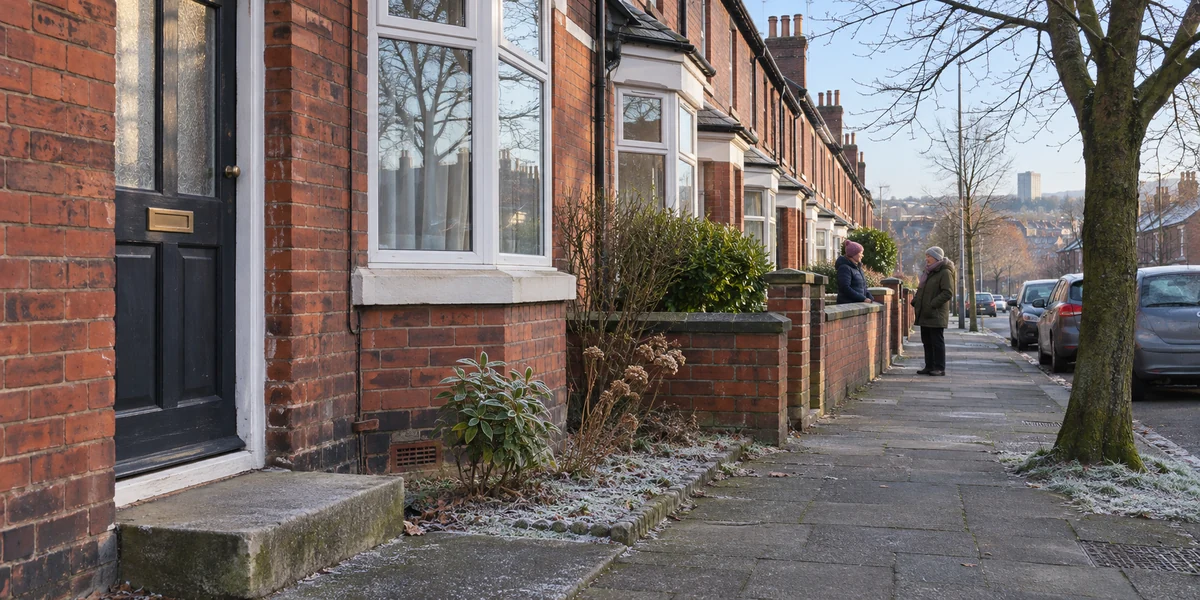
Most of us think about what we need to do when we go out. We might check the weather or make sure we’ve got our keys, but we can usually take it for granted that we’ll get from the front door to the pavement. If the front step is too high to manage on your own, or the path slopes and there’s nothing to hold on to, that short stretch can determine whether you go out at all. And when frost or ice makes the way slippery to boot, even a route usually managed might have to wait until later in the day, or later in the week, when it’s thawed or someone is around to help. That can change someone’s week in ways that are easy to miss.
Think of someone you know who might find it more difficult to navigate that stretch from the front door to the street. A trip to the shops might be where they usually see a familiar face, and putting the bins out might be when they catch up with a neighbour. If they start going out less often, those chats can become fewer and further between. You might see less of them without realising they’re seeing less of everyone.
Why isolation can feel sharper at this time of year
As the festive season approaches, there’s more going on locally and more talk about getting together. A Christmas lights switch-on or an evening event might be something someone you know would love to go to. But if they can only manage their front step in daylight, or need someone there when they come home, taking part depends on whether those arrangements can be easily made.
Even when there’s nothing particular in the diary, it matters to be able to go out when you feel like it. If the frost lingers all morning and it’s dark by late afternoon, that window of opportunity to leave the house shrinks dramatically. Another day can go by indoors, then another, and isolation creeps in.
The part of isolation we can easily overlook
If someone says they hardly go out anymore, it’s worth asking what getting out of the house is like for them. Can they get down the step on their own? What’s it like coming back after dark? Is there somewhere to steady themselves while they unlock the door? Asking about an ordinary day can tell you a lot about what’s changed and what would make a difference.
For someone who’s been working around the same barrier for months, easier access could mean getting back a part of their day they’ve missed. It might mean seeing the neighbours more often, making plans without checking who’s free to help, or simply deciding to go out and being able to do it. That’s a freedom many of us take for granted every time we open the front door.
Talk to us about access at home
If steps, paths or lighting are making it harder to get out, an OT home assessment can help you explore practical options for your home and daily routines. Book a free telephone consultation, or read what to expect from an OT home assessment.

